2026 Healthcare Hydration Statistics UK: Standards, Safety, and Sustainability Image

Hygiene Responsibilities for Water Dispensers: Who Does What After Installation

For a commercial water dispenser, your hygiene and compliance documentation should include installation records, service contract details, planned maintenance schedules, sanitisation records, filter replacement logs, cleaning responsibilities, fault reporting processes and user guidance.

These documents help show who is responsible for what after installation, how the system is maintained and how hygiene standards are supported throughout the life of the dispenser.

For Healthcare Facility Managers, this clarity is especially important. In private hospitals, assisted living environments, care settings and high-footfall workplaces, hydration is not only a convenience. It is part of the wider duty to provide safe, accessible and reliable drinking water for staff, patients, residents or visitors.

The best approach is to define responsibilities before the dispenser is first used. Your supplier should explain what they manage, what your internal team needs to check, what documentation should be retained and how future servicing will be recorded. That way, hygiene does not depend on memory, informal handovers or unclear ownership.

Key Takeaways

  • Hygiene responsibilities should be agreed before first use, not only after a problem or audit request.
  • Key documentation should include installation confirmation, service records, sanitisation logs, filter replacement history, cleaning responsibilities and fault reporting procedures.
  • Supplier responsibilities usually include installation, scheduled maintenance, system sanitisation, filter changes and technical repairs, depending on the contract.
  • Internal teams are usually responsible for day-to-day visual checks, basic surface cleanliness, user reporting and keeping local records accessible.
  • Placement matters because poor location choices can affect cleanliness, access, usage and day-to-day hygiene management.
  • BRITA’s hygiene protection is built into every system as standard, led by ThermalGate™, which automatically heats the tap outlet to guard against external contamination, alongside the CLARITY Protect filter fitted to each dispenser.
  • A good post-installation process gives facilities, care, procurement and compliance teams confidence that water provision is being managed properly.

Why Hygiene Responsibility Needs to Be Clear After Installation

A water dispenser is often treated as “complete” once it has been installed and handed over. In reality, installation is only the starting point. The dispenser then becomes part of the daily environment, used by different people across different times of day and maintained through a combination of supplier support and internal site routines.

If responsibilities are not clear, small issues can become difficult to manage. A staff member may notice a drip tray needs attention but not know who reports it. A manager may assume filter changes are handled automatically, while the facilities team may not have a record of when the next service is due. During an inspection or internal review, teams may struggle to find evidence of sanitisation, maintenance or fault handling.

This is why hygiene responsibility should be documented. The aim is not to create unnecessary admin. The aim is to make safe, reliable hydration easy to manage.

For organisations reviewing commercial water dispensers, hygiene should be considered as part of the full service model, not only as a product feature. A dispenser that looks suitable must also come with clear support, clear maintenance processes and clear records.

What Hygiene and Compliance Documentation Should You Have in Place?

The right documentation will depend on your sector, building type, internal policies and the contract agreed with your supplier. However, most commercial environments should keep a practical set of records that show how the dispenser was installed, how it is maintained and who is responsible for ongoing checks.

A strong documentation pack should include the following.

1. Installation Handover Record

The installation handover record confirms that the dispenser has been installed correctly and is ready for use. It should identify the unit, the installation date, the location, the supplier or engineer involved and any important setup details.

This record is useful because it creates a clear starting point for the dispenser’s lifecycle. It also helps future teams understand when the unit was installed, where it is connected and what was agreed at handover.

For a healthcare or care environment, the handover should be easy to locate if a compliance lead, estates manager or senior team member asks for evidence of how the system was introduced.

2. Service and Maintenance Agreement

The service agreement explains who is responsible for ongoing maintenance, what is included and how often planned visits will take place. This is one of the most important documents because it defines supplier accountability.

It should explain whether the supplier covers:

  • Planned maintenance visits.
  • Filter replacement.
  • Full system sanitisation.
  • Dispenser point cleaning.
  • Repairs.
  • Leak checks.
  • Replacement parts.
  • Customer support.
  • Emergency or reactive callouts.
  • Service visit reporting.

If your organisation is comparing water dispenser servicing & maintenance, this agreement is where hygiene promises become practical responsibilities.

3. Planned Preventative Maintenance Schedule

A planned preventative maintenance schedule shows when servicing is expected and what will be checked. This helps avoid a reactive approach where the dispenser is only inspected after a fault, complaint or hygiene concern.

The schedule should be clear enough for internal teams to understand:

  • How often visits will happen.
  • Who arranges the visits.
  • Whether the site needs to prepare anything.
  • What parts of the system are checked.
  • Whether filter changes are included.
  • Whether sanitisation is included.
  • How completed visits are recorded.

For Healthcare Facility Managers, planned maintenance is valuable because it supports a consistent environment for vulnerable users. It also gives internal teams a clear record to refer to during audits, reviews or supplier meetings.

4. Sanitisation Records

Sanitisation records show when the dispenser system was cleaned or sanitised as part of the maintenance process. These records are especially important in shared environments where the dispenser may be used many times a day.

A good record should show:

  • Date of sanitisation.
  • Name or reference of the engineer or supplier.
  • Parts of the system sanitised.
  • Any observations.
  • Any follow-up action needed.
  • Confirmation that the dispenser was left ready for use.

The record does not need to be complicated, but it should be consistent. If there is ever a hygiene query, your team should be able to show when sanitisation happened and who carried it out.

5. Filter Replacement Log

Filter replacement logs help show that the dispenser is being maintained in line with the agreed service model. This is particularly important for filtered systems, where taste, performance and hygiene confidence depend on proper filter management.

The log should include:

  • Date of replacement.
  • Filter type or cartridge reference where relevant.
  • Engineer or supplier details.
  • Next expected replacement date.
  • Any notes from the visit.

This helps facilities and compliance teams avoid guesswork. It also reduces the risk of relying on informal memory when someone asks when the filter was last changed.

6. Cleaning Responsibility Matrix

Not every hygiene task belongs to the supplier. Some day-to-day responsibilities may remain with the site team, cleaning contractor, facilities team or local department.

A simple responsibility matrix can make this clear.

For example:

  • Supplier: system sanitisation, filter changes, technical servicing, repairs.
  • Facilities team: reporting issues, checking service dates, coordinating access.
  • Cleaning team: external surface cleaning, surrounding area cleanliness, emptying or cleaning visible trays where required.
  • Department manager: making sure staff know how to report issues.
  • Users: using the dispenser correctly and reporting visible faults.

This kind of matrix is helpful because it prevents assumptions. Everyone knows where their responsibility starts and ends.

7. Fault Reporting and Escalation Process

A dispenser hygiene plan should explain what happens if something looks wrong. For example, what should staff do if they notice unusual taste, a leak, a blocked drip tray, poor flow, a visible hygiene issue or a unit that is out of use?

The process should include:

  • Who staff report issues to.
  • How the issue is logged.
  • Who contacts the supplier.
  • What information should be provided.
  • How urgent issues escalate.
  • How updates are communicated.
  • How closure is confirmed.

This is particularly important in healthcare or assisted living settings because small delays can affect staff confidence and user access.

8. Location and Risk Assessment Notes

Hygiene is not only about cleaning and servicing. It is also affected by where the dispenser is placed.

A poor location can make the dispenser harder to clean, more exposed to contamination, less accessible or more likely to create operational issues. A better location supports regular use, safe access and easier daily management.

Before installation, teams should confirm the site’s practical requirements, including plumbing, power access, cleaning space and safe access for service engineers. These checks help clarify what the workspace requires before installing a water dispenser, so the location can be agreed with hygiene, access and servicing in mind. 

Useful notes may include:

  • Access to plumbing.
  • Access to power.
  • Cleaning access around the unit.
  • Whether the area is high traffic.
  • Distance from clinical, food preparation or waste areas where relevant.
  • Visibility for users.
  • Accessibility for staff, patients, residents or visitors.
  • Whether direct sunlight or heat exposure has been avoided.
  • Whether service engineers can access the unit safely.

These notes do not need to be lengthy, but they help show that the unit was placed thoughtfully rather than simply where space was available.

Who Does What After Installation?

A strong hygiene plan depends on shared responsibility. The supplier, facilities team, cleaning team and site users all play a role. The most important thing is that those roles are written down clearly.

Supplier Responsibilities

Your supplier should be responsible for the technical and contracted service elements. Depending on the agreement, this may include installation of the water dispenser, planned maintenance, full system sanitisation, filter replacement, repairs, leak testing, technical checks and service documentation.

For Healthcare Facility Managers, supplier accountability is critical because the internal team may not have the technical training, parts or product knowledge needed to maintain the system properly. The supplier should provide expert support and clear records.

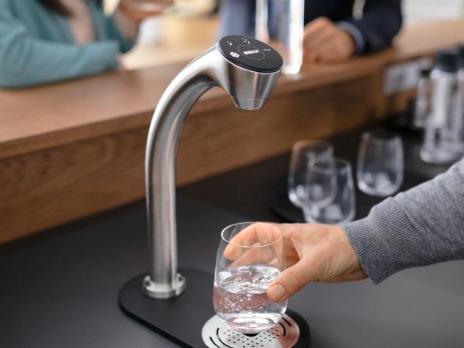
With BRITA, much of this hygiene protection is built into the system as standard, rather than relying on manual cleaning alone. ThermalGate™ comes as standard on BRITA water dispensers, automatically heating the tap outlet to protect against external contamination introduced by everyday contact such as touching, coughing or sneezing. It works continuously, including during quiet periods such as nights and weekends, and needs no chemical additives. Every dispenser is also fitted with the CLARITY Protect filter as standard, reducing bacteria, cysts, metals, PFAS and substances that affect taste and odour. In addition, PureProtect recirculation technology helps prevent water from stagnating in the system, reducing the need for frequent chemical sanitisation. For the most hygiene-sensitive environments, such as hospitals and care settings, the optional HygienePlus solution adds the CLARITY Safe X3 bacterial filter just before the outlet for an even higher level of protection. Understanding which safeguards are standard and which are optional gives teams a clearer way to discuss built-in hygiene support alongside the supplier’s maintenance procedures.

Facilities Team Responsibilities

The facilities team usually owns the operational relationship. This means they coordinate access, retain service records, monitor recurring issues and make sure the supplier is contacted when support is needed.

A facilities team may also be responsible for:

  • Keeping the documentation pack up to date.
  • Checking that planned maintenance visits have taken place.
  • Making sure service reports are stored centrally.
  • Coordinating with cleaning teams.
  • Reviewing placement if usage or cleanliness becomes a concern.
  • Communicating changes to staff.
  • Raising repeated issues with the supplier.

This role is especially important during the first few weeks after installation. Early usage can reveal whether the dispenser is in the right place, whether staff understand how to use it and whether any local process needs adjusting.

Cleaning Team Responsibilities

Cleaning teams may not be responsible for internal system hygiene, but they often play an important role in the visible cleanliness of the dispenser area.

Their responsibilities may include:

  • Cleaning external surfaces according to site policy.
  • Keeping the surrounding floor and counter area clean.
  • Reporting leaks or spills.
  • Emptying visible drip trays if this is part of the agreed local process.
  • Flagging repeated cleanliness issues to facilities.

These responsibilities should be documented because external cleanliness affects user confidence. Even if the internal system is professionally maintained, a messy surrounding area can make people question whether the dispenser is hygienic.

Department or Ward-Level Responsibilities

In healthcare and assisted living settings, local teams may interact with the dispenser throughout the day. They may not own maintenance, but they are often the first to notice whether something is wrong.

Their responsibilities may include:

  • Reporting visible faults.
  • Making sure staff know who to contact.
  • Encouraging correct use.
  • Highlighting accessibility issues.
  • Raising concerns if users struggle with the dispenser location or operation.

This helps bridge the gap between central facilities management and daily user experience.

User Responsibilities

Users have a simple but important role: use the dispenser correctly and report visible problems. This can be supported through clear signage, simple user guidance and staff communication during handover.

Users should know:

  • Which buttons or taps to use.
  • Whether bottles or cups are appropriate.
  • What not to touch or adjust.
  • How to report leaks, poor flow or visible issues.
  • Who to contact if the dispenser is out of use.
  • When to flush the system by running off a volume of water after periods of disuse, i.e. on a Monday morning, or following an office closure.

User guidance should be short and practical. The goal is to prevent misuse and make reporting easy.

How Placement Affects Hygiene Management

Placement decisions can either support hygiene or make it harder to manage. This is why placement should be reviewed before installation and revisited if problems appear after first use.

A dispenser placed in a busy but suitable area can encourage hydration and make monitoring easier. A dispenser placed too close to waste areas, dusty zones, heat sources or congested walkways may create more hygiene and operational concerns.

For offices, shared spaces and staff areas, BRITA’s guide on where to place a water dispenser in your office is useful because it links placement to visibility, accessibility, cleanliness and user behaviour.

For healthcare settings, the same principles apply, but the stakes may be higher. Consider whether the location is suitable for the people using it, whether the area is cleaned regularly and whether the dispenser can be accessed without creating unnecessary congestion.

Hygiene Responsibilities During the First 30 Days

The first month after installation is an important period. It is when users start interacting with the dispenser and internal teams can see whether the agreed process works in practice.

During the first 30 days, your team should check:

  • Is the dispenser being used as expected?
  • Do staff know how to report issues?
  • Is the surrounding area staying clean?
  • Are there any access problems?
  • Are there repeated spills or misuse?
  • Is the location right for the intended users?
  • Has the installation documentation been stored?
  • Is the maintenance schedule clear?
  • Does the cleaning team understand its responsibilities?

This early review helps prevent small issues becoming long-term habits. It also gives facilities teams a chance to refine signage, cleaning routines or reporting processes.

What to Keep in Your Water Dispenser Hygiene File?

A water dispenser hygiene file should be simple, accessible and easy to update. It does not need to be over-engineered, but it should be complete enough to answer common questions.

A practical file could include:

  • Supplier contact details.
  • Installation handover record.
  • Product model and location.
  • Service and maintenance agreement.
  • Planned maintenance schedule.
  • Completed service reports.
  • Sanitisation records.
  • Filter replacement logs.
  • Cleaning responsibility matrix.
  • Local cleaning checklist.
  • Fault reporting process.
  • Escalation contacts.
  • User guidance or signage copy.
  • Any risk assessment notes.
  • Records of repeated issues and actions taken.

For multi-site organisations, the same template can be used across locations. This makes it easier to compare performance, manage supplier reviews and identify recurring issues.

What Procurement Should Check Before Contracting

During the buying stage, procurement may receive tenders, compare offers and manage contract details. Hygiene documentation should be part of that process, not an afterthought.

Procurement should ask:

  • What hygiene procedures are included in the contract?
  • Are planned maintenance visits included?
  • Are filter replacements included?
  • Is full system sanitisation included?
  • How are service records provided?
  • Are repairs included?
  • Who carries out installation and maintenance?
  • Are engineers trained on the equipment?
  • Is there a named support route?
  • What happens if a hygiene concern is reported?
  • Are responsibilities clearly stated in the contract?

This helps prevent confusion later. It also ensures the contract reflects the operational reality the facilities or healthcare team will manage after installation.

Where the payment model is being reviewed, mains-fed water dispenser rental options can be considered alongside maintenance expectations, because rental and purchase routes may involve different service arrangements.

What Healthcare Facility Managers Should Ask at Handover

The handover is the best moment to confirm how hygiene will be managed. Do not rely only on the contract. Ask practical questions while the supplier or technician is still on site.

Useful handover questions include:

  • Has the unit been installed according to the agreed location plan?
  • What hygiene checks were completed before first use?
  • What parts of the system are covered by supplier servicing?
  • How often will maintenance visits happen?
  • How will filter changes be recorded?
  • Who receives service reports?
  • Who should staff contact if they notice a problem?
  • What visible checks should the site team carry out?
  • How should the cleaning team treat the dispenser area?
  • What signs of misuse or faults should be escalated?

This makes the handover more than a product introduction. It becomes the point where ongoing responsibility is confirmed.

How Office and Healthcare Requirements Differ

The same dispenser hygiene principles can apply across different workplaces, but the level of documentation may vary.

In corporate offices, teams may focus on employee experience, workplace cleanliness, sustainability and reliable access. In healthcare or assisted living settings, documentation may need to be more robust because the users may include patients, residents, clinical staff or vulnerable people.

That does not mean offices should treat hygiene casually. Shared workplace water points still need clear cleaning, maintenance and reporting processes. However, a Healthcare Facility Manager may need more detailed records, clearer escalation steps and stronger evidence of planned servicing.

For hospitals, clinics, care environments and similar settings, healthcare water dispensers should be assessed with hygiene, accessibility, servicing and user confidence in mind. The right solution needs to support safe hydration for staff, patients, residents and visitors while remaining practical for the teams responsible for day-to-day management.

For teams managing office water dispensers, the same foundation applies: reliable access, professional servicing, clear responsibilities and visible cleanliness. The difference is how detailed the documentation needs to be for the environment.

How to Avoid Common Post-Installation Hygiene Gaps?

Many hygiene problems come from unclear ownership rather than poor intentions. The following gaps are common, but they are also avoidable.

Gap 1: Assuming the Supplier Does Everything

The supplier may handle technical maintenance, but local teams still need to manage visible cleanliness, user reporting and record storage. Clarify what remains on site.

Gap 2: Keeping Records in Too Many Places

If service reports, installation details and cleaning checklists are stored separately, they may be hard to find when needed. Use one central file or folder.

Gap 3: No Clear Fault Reporting Route

If users do not know who to tell, small issues can go unreported. Make reporting simple and visible.

Gap 4: No First-Month Review

A first-month review helps catch location, cleaning or usage issues early. Without it, poor habits can become normal.

Gap 5: Treating Hygiene as Only a Cleaning Task

Hygiene also depends on installation quality, filter changes, system sanitisation, servicing, location, user behaviour and supplier support.

Gap 6: No Escalation Process

If the same issue happens repeatedly, your team needs a clear route to escalate it with the supplier. This should be documented.

Turning Hygiene Documentation Into a Working Process

The best hygiene documentation is not created for a folder and forgotten. It should support day-to-day management.

A practical process might look like this:

First, confirm the installation and handover details. Then store the service agreement, maintenance schedule and supplier contact route in one central place. Next, agree to local cleaning responsibilities and make sure the cleaning team knows what they own. Then communicate simple user guidance to staff. After the first 30 days, review whether the setup is working and update the process if needed.

This keeps documentation connected to real use. It also helps Healthcare Facility Managers demonstrate that the dispenser is not only installed, but actively managed.

When to Review Your Hygiene Responsibilities?

Hygiene responsibilities should not remain static. Review them when:

  • A new dispenser is installed.
  • A dispenser is moved.
  • Usage increases.
  • The site layout changes.
  • Cleaning contractors change.
  • A fault or complaint is reported.
  • Maintenance records show recurring issues.
  • Internal policies change.
  • A compliance review is planned.
  • A contract is renewed.

Regular review helps keep the process accurate. It also makes supplier conversations more productive because you can refer to records rather than anecdotal feedback.

Building Confidence After Installation

After installation, the main question is not only “does the dispenser work?” It is “can we show how hygiene is being managed?”

For Healthcare Facility Managers, that confidence comes from clear documentation, professional servicing, internal ownership and supplier accountability. When each responsibility is defined, the dispenser becomes easier to manage, easier to review and easier to trust.

The strongest hygiene process should show:

  • What was installed.
  • Where it was installed.
  • Who installed it?
  • How it is maintained.
  • When it is sanitised.
  • When filters are replaced.
  • Who cleans visible areas.
  • Who reports faults?
  • Who escalates issues.
  • Where records are kept.

This is the difference between simply having a dispenser on site and having a managed hydration solution.

If your organisation is preparing for installation, reviewing supplier responsibilities or planning a more reliable hydration setup, you can contact us for a water dispenser quote for your business.

FAQs about Commercial Water Dispenser Hygiene Responsibilities

What hygiene and compliance documentation should we have for a commercial water dispenser?

You should keep installation records, service agreement details, planned maintenance schedules, sanitisation records, filter replacement logs, cleaning responsibilities, fault reporting procedures and user guidance. These documents show how the dispenser is maintained and who is responsible for each hygiene-related task.

Who is responsible for cleaning a commercial water dispenser after installation?

Responsibility is usually shared. The supplier typically manages technical servicing, sanitisation, filter replacement and repairs if included in the contract. The site team or cleaning team usually manages visible external cleanliness, the surrounding area and day-to-day reporting of issues.

Should filter changes be documented?

Yes. Filter changes should be documented because they show that the dispenser is being maintained according to the agreed service model. The record should include the date, filter type where relevant, engineer or supplier details and the next expected replacement date.

What should be included in a dispenser handover?

A handover should confirm the dispenser location, installation date, unit details, service responsibilities, maintenance schedule, hygiene procedures, fault reporting process and any user guidance. It should also explain what the supplier manages and what the internal team needs to monitor.

How often should water dispenser hygiene responsibilities be reviewed?

Review responsibilities after installation, after the first month of use, during contract reviews, after any recurring fault, when the dispenser is moved or when site cleaning arrangements change. Regular review keeps the process accurate and useful.

Why is placement important for hygiene?

Placement affects cleanliness, access, visibility and ease of maintenance. A dispenser should be positioned where users can access it easily, cleaning teams can maintain the area and service engineers can reach it safely. Poor placement can make hygiene harder to manage.

What should Healthcare Facility Managers prioritise?

Healthcare Facility Managers should prioritise clear documentation, professional maintenance, robust sanitisation records, filter replacement logs, accessible fault reporting and supplier accountability. In settings with vulnerable users, hygiene processes need to be easy to evidence and consistently followed.


Related content

Invisible Waste Small Teaser (Mobile) - 464x348

Almost half of businesses leave equipment on overnight

BRITA's new campaign uncovers how much energy and money businesses potentially waste by leaving their equipment on overnight and provides essential insights to help businesses cut energy usage across three key sectors – Corporate, Hospitality and Healthcare.

BRITA - Gym Cycling (880x880)

How To Choose The Ideal Water Dispenser For Your Gym

From installation to water types, see our suggestions on why choosing to install a water dispenser in your gym environment.

2021_BRITA_Extra_C-Shape_small_tap_glas_710x400

Healthy office, healthy mind: promoting wellbeing with your office facilities

“Research shows that happy staff really are better staff. If businesses ensure they are creating a positive environment for their staff, they’ll reap the benefits"